In August 1963, the Dutch company Philips introduced the Compact Cassette at the Berlin Radio Show. Designed under the leadership of engineer Lou Ottens, this pocket-sized plastic shell containing magnetic tape was originally intended for humble office dictation. Little did the corporate world realize that this compact marvel would spark a massive consumer audio revolution. For the first time in history, average listeners gained the miraculous power to record sound at home without needing a professional recording studio or a massive bank loan.
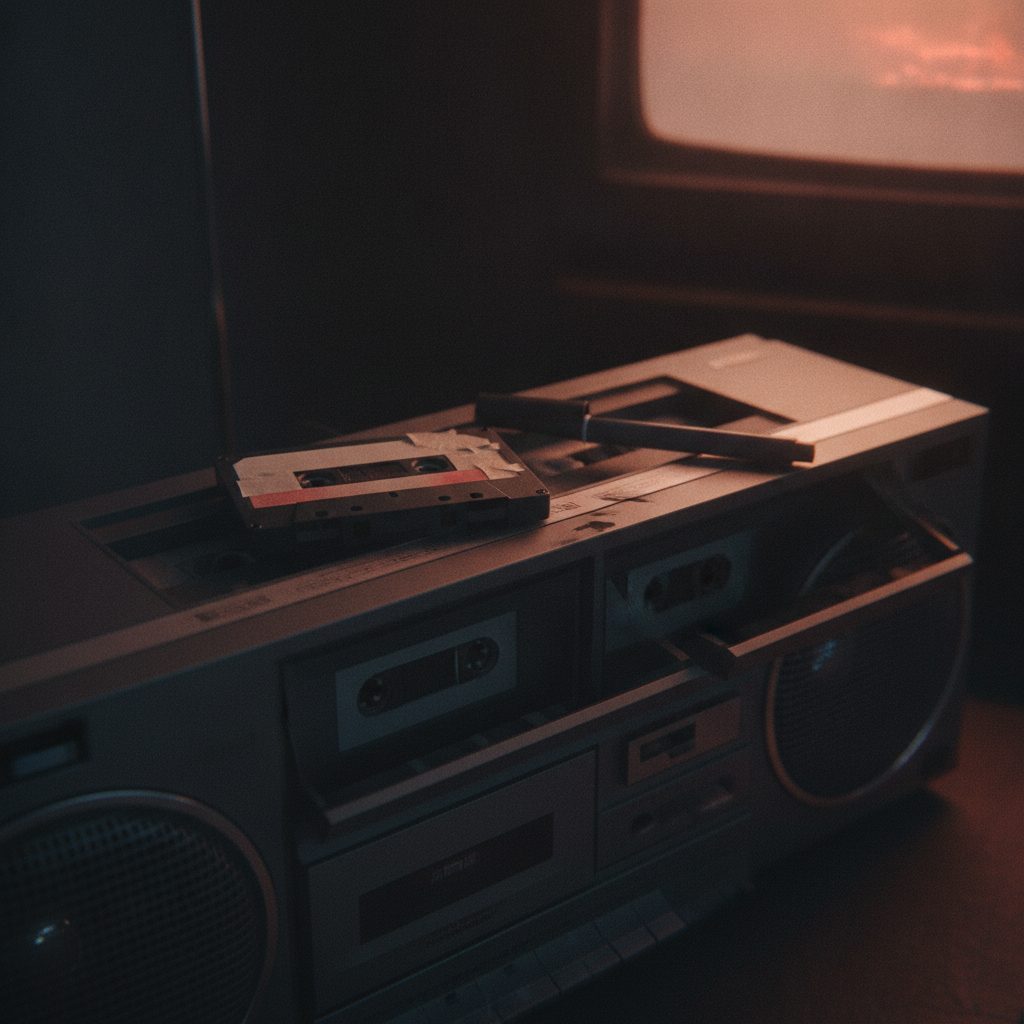
As high-fidelity audio gear exploded during the 1970s and 1980s, home audio systems received a game-changing upgrade: the dual-deck tape recorder. Portable dual-deck boomboxes and sleek home stereo component systems gave music enthusiasts the magical power of dubbing. With two cassette wells sitting side by side, a user could copy music directly from one tape to another at the touch of a button. Dubbing democratized music distribution, allowing friends to share rare albums and trade custom compilations long before the internet existed.
Before dubbing from another tape became commonplace, the primary source for fresh music was live FM radio. Aspiring home curators spent endless weekend hours glued to the dial, fingers hovering over the Play and Record buttons in synchronized anticipation. Capturing a top hit required absolute concentration and cat-like reflexes. More often than not, the local disc jockey would chat over the instrumental intro, leaving listeners with a prized recording that began with a traffic update or a cheery station ID.
The brand of blank tape you loaded into your deck was a personal statement. Japanese manufacturing giants TDK and Maxell dominated bedroom desk shelves with sleek packaging and high-tech aesthetics. Audio lovers debated the merits of normal-bias ferric oxide formulas against high-bias chromium dioxide tapes. Creators were strictly bound by physical length constraints, most notably the classic C60 and C90 formats. A C90 cassette provided 45 minutes of recording time per side. Miscalculating track lengths meant a dramatic guitar solo might be cut off abruptly as side A ran out of physical tape.
Sequencing a tape was a delicate art form that required emotional calibration, patience, and mathematical precision. Whether building an energetic soundtrack for a summer road trip or secretly pouring your heart out to a high school crush, every song placement mattered. Side A required a powerful opening track and a lingering finale. Mindful curators used scrap paper to add up song durations, striving to minimize awkward silent gaps before the mechanical click of the auto-stop mechanism. Once recorded, hours were spent penning song titles onto the paper J-card insert.
All physical reign must eventually come to an end, and the mixtape was no exception. By the late 1990s, writable optical media arrived as affordable CD burners and blank CD-R discs allowed users to copy tracks with crisp digital quality and instant track skipping. Shortly after, the explosion of MP3 audio files and digital media players transformed music collection into an instant, drag-and-drop affair. Digital streaming playlists replaced physical tapes entirely, trading away the analog hiss, pencil-rewinding rituals, and hand-decorated J-cards for infinite algorithmic convenience.
Even though digital playlists offer instant access to millions of songs, the legacy of the humble cassette tape remains unmatched. There was a unique intimacy in giving someone a physical object that represented hours of active listening, careful math, and manual effort. The cassette mixtape proved that music was not just something you bought in a store; it was something you could curate, customize, and share on your own terms.

Be the first to say something.