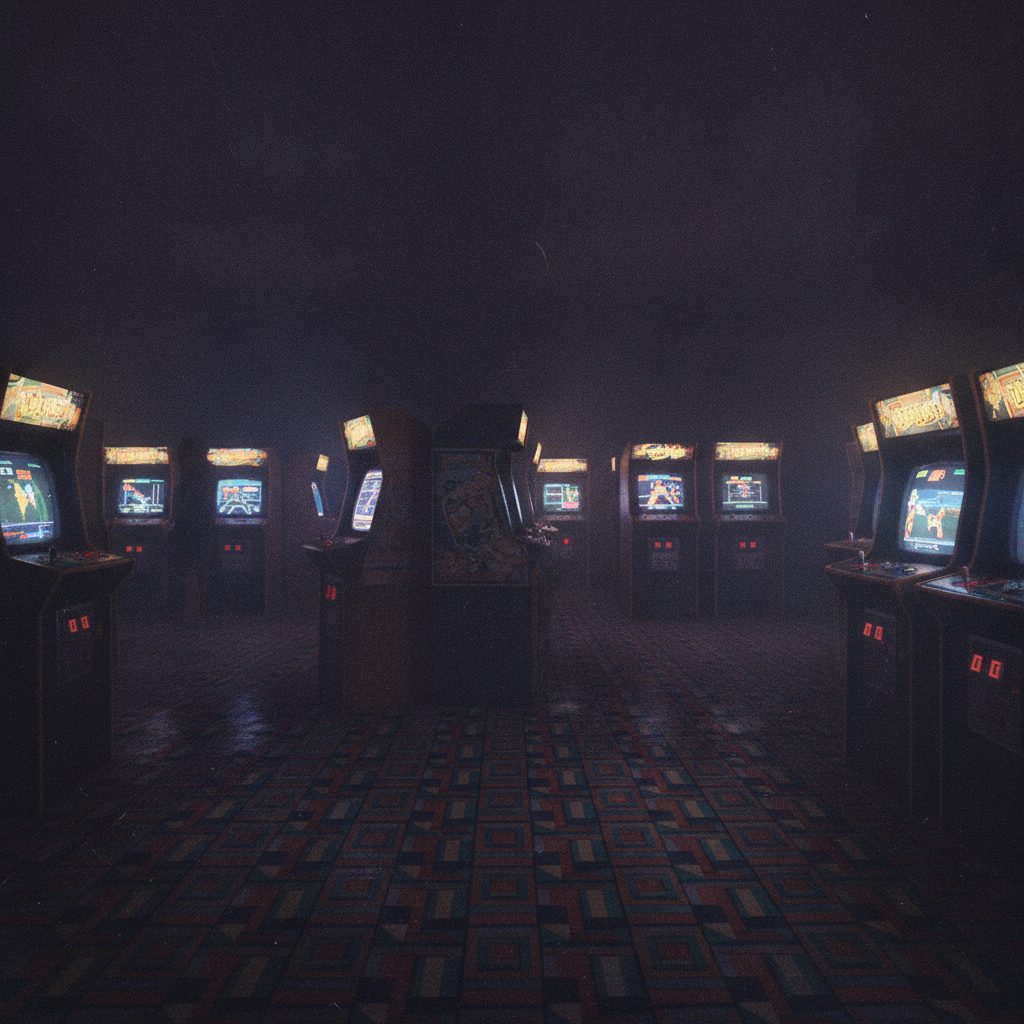
The smell of carpet, the hum of the cabinets, an empty pocket.
Step into the glowing atmosphere of the classic video arcade, where synthesized sound effects and high score leaderboards ruled supreme. From vector space shooters to high-flying sports action, these twelve arcade landmarks shaped gaming history forever.
01
Space Invaders (Taito, 1978)
Designed by Tomohiro Nishikado and released by Taito in 1978, this fixed shooter forced players to blast descending rows of alien invaders. It became an unprecedented global phenomenon that helped turn coin-operated video games into a mainstream entertainment industry.
Atari launched this vector-graphics masterpiece in late 1979, putting players in control of a triangle ship navigating a wraparound space field. It sold tens of thousands of arcade cabinets and introduced high-score initials saving to keep players competing for glory.
Created by Toru Iwatani for Namco, Pac-Man shifted arcade trends away from space shooters toward maze games when it debuted in 1980. Its yellow hero and four colorful ghosts became major pop-culture icons while attracting a broad demographic of players.
Designed by Eugene Jarvis and released by Williams Electronics, Defender challenged arcade goers with side-scrolling action and a complex control layout. Players had to defeat waves of alien landers while rescuing abducted humanoids from the planet surface.
Shigeru Miyamoto designed this 1981 hit for Nintendo, creating one of the very first platform games with a narrative arc. Players controlled Jumpman, later known as Mario, as he dodged rolling barrels to rescue Pauline from a giant ape.
Namco released Galaga in 1981 as a sequel to Galaxian, adding fast-pacing alien flight patterns and tractor-beam mechanics. Players could intentionally let their ship get captured and then rescue it to command double fire power on screen.
Developed by Konami in 1981, Frogger challenged players to guide a frog across a hazardous multi-lane highway and a log-filled river. The simple hop-based controls and memorable audio cues made it an enduring arcade hit.
Developed by General Computer Corporation and released by Bally Midway in 1982, Ms. Pac-Man refined the original game formula with four distinct mazes and moving bonus items. It went on to become one of the most successful American arcade releases of all time.
Atari Games brought top-down fantasy dungeon crawling to arcades with Gauntlet in 1985. Four players could team up simultaneously as the Warrior, Valkyrie, Elf, or Wizard while an iconic digitized voice declared who needed food badly.
Capcom revolutionized competitive fighting games in 1991 with a roster of eight distinct international martial artists and deep combo mechanics. Its wild popularity ignited a massive fighting game boom in arcades across the world.
Midway Games shocked arcade halls in 1992 by using digitized real-life actors and graphic Fatality finishing moves. The resulting public debate over video game violence directly contributed to the formation of the ESRB rating system.
Midway brought two-on-two arcade basketball to life in 1993 with gravity-defying dunks, digitized NBA players, and enthusiastic play-by-play commentary. The catchphrase about being on fire became an instant part of gaming culture.
Adjust your TV dials and drop a comment below to tell us which cabinet stole your entire childhood allowance. Share this blast from the past with your favorite Player Two before the Game Over screen fades to black!
Liked this?
RC
The Remote Control Desk
The Common Clickbait crew who watch too much so you do not have to. Fueled by nostalgia, cheap snacks, and an unhealthy need to be right about the ending.
Join the conversation
0comments
Which iconic arcade game swallowed most of your spare pocket change back in the day?


Be the first to say something.