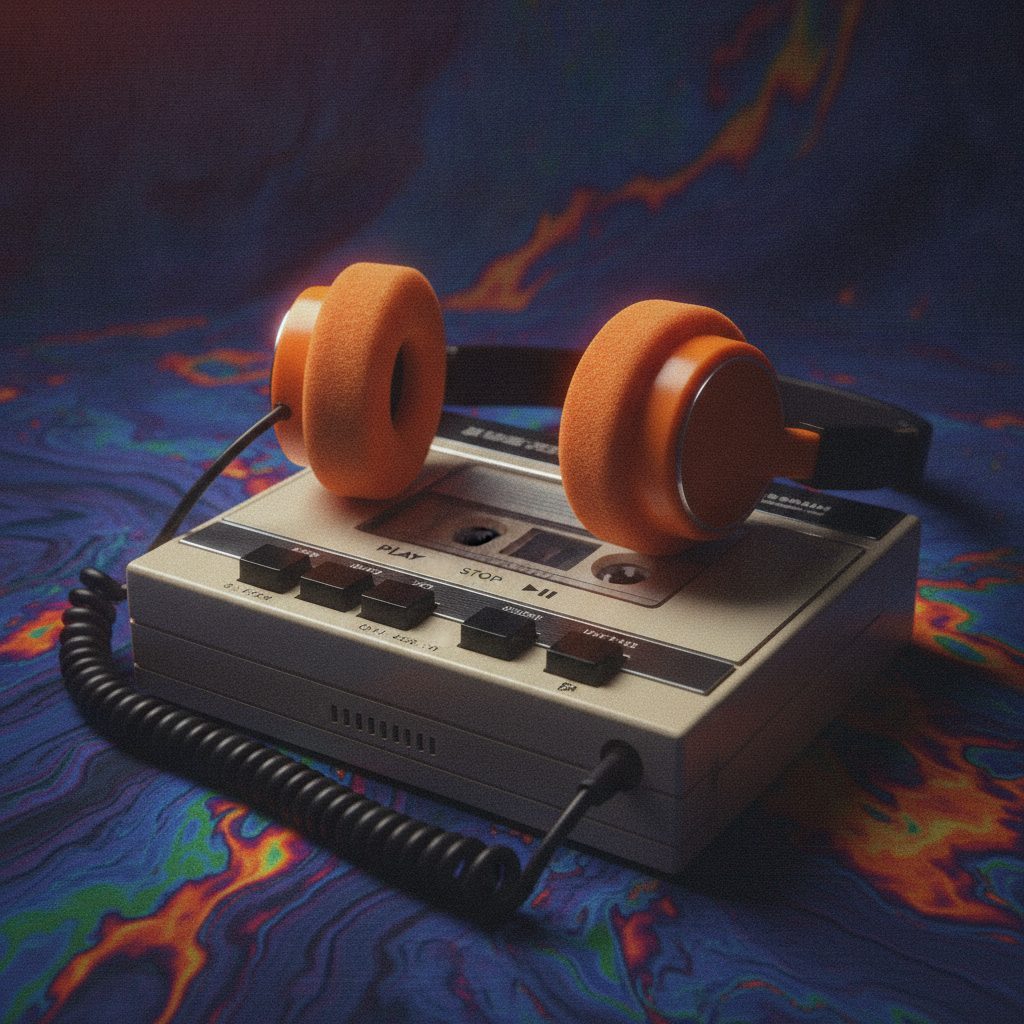
Before personal audio transformed our daily commutes, enjoying music in public meant hauling around a heavy boombox or relying on whatever the local radio DJ felt like playing. Everything shifted on July 1, 1979, when Sony launched the TPS-L2 Walkman in Japan. This metallic blue and silver cassette player brought high quality stereo sound straight to individual ears, letting people enjoy their favorite albums on the move without forcing everyone nearby to listen. Weighing under a pound and running on simple AA batteries, it turned everyday walking into a personal cinematic experience.
The inspiration behind this pop culture revolution didn't emerge from a corporate marketing room. Sony co-founder Masaru Ibuka simply wanted a comfortable way to listen to opera during frequent long distance business flights across the globe. He brought the idea to Sony chairman Akio Morita. Sony engineers quickly responded by taking the existing Pressman dictation recorder, stripping out the internal recording hardware, and adding stereo playback circuitry designed for lightweight headphones.
Internal skepticism flared up almost immediately. Retail experts and skeptics inside the company argued that a play-only cassette player without a record function would be a commercial failure. After all, cassette decks at the time were defined by their ability to record tape. Yet Akio Morita held firm, believing consumers would gladly exchange recording features for portable, personal audio playback. His gamble paid off quickly, as the initial production run sold out within two months of its debut.
To keep the new device from feeling entirely isolating, Sony equipped the original TPS-L2 model with dual headphone jacks. That meant two friends could plug in and listen to the same cassette simultaneously. The player even featured an orange hotline button that lowered the music volume and activated a built-in microphone so both listeners could chat without removing their headphones. Although subsequent models dropped the secondary jack, that initial design built a temporary bridge between communal listening and the quiet world of solitary playback.
That personal audio bubble sparked a massive cultural shift. Suddenly, ordinary commuters, joggers, and street walkers could navigate crowded sidewalks inside their own private soundtrack. Headphones in public shifted from an oddity into a social norm, establishing a fresh sense of personal boundary within dense urban spaces. The device transformed music from a shared household activity into an intimate, customizable soundtrack for daily life.
Throughout the 1980s, the Walkman grew into a dominant global phenomenon. Sony refined the hardware into sleeker, smaller, and cheaper variations that dominated the market. By 1999, Sony had sold roughly 186 million cassette Walkman units worldwide, driving the compact cassette past vinyl to become the leading music format of the era. The brand name became so famous that major dictionaries eventually added the word as a common noun for portable tape players.
By proving that people wanted portable music, Sony created the foundational roadmap for modern personal electronics. The company expanded on its cassette foundation by launching the portable CD player, marketed as the Discman, in 1984. Years later, Apple built upon that exact user desire when it introduced digital files on the iPod. Every modern listener wearing wireless earbuds on a busy morning subway owes a quiet debt to that blue and silver cassette player that first made music personal and mobile.

Be the first to say something.