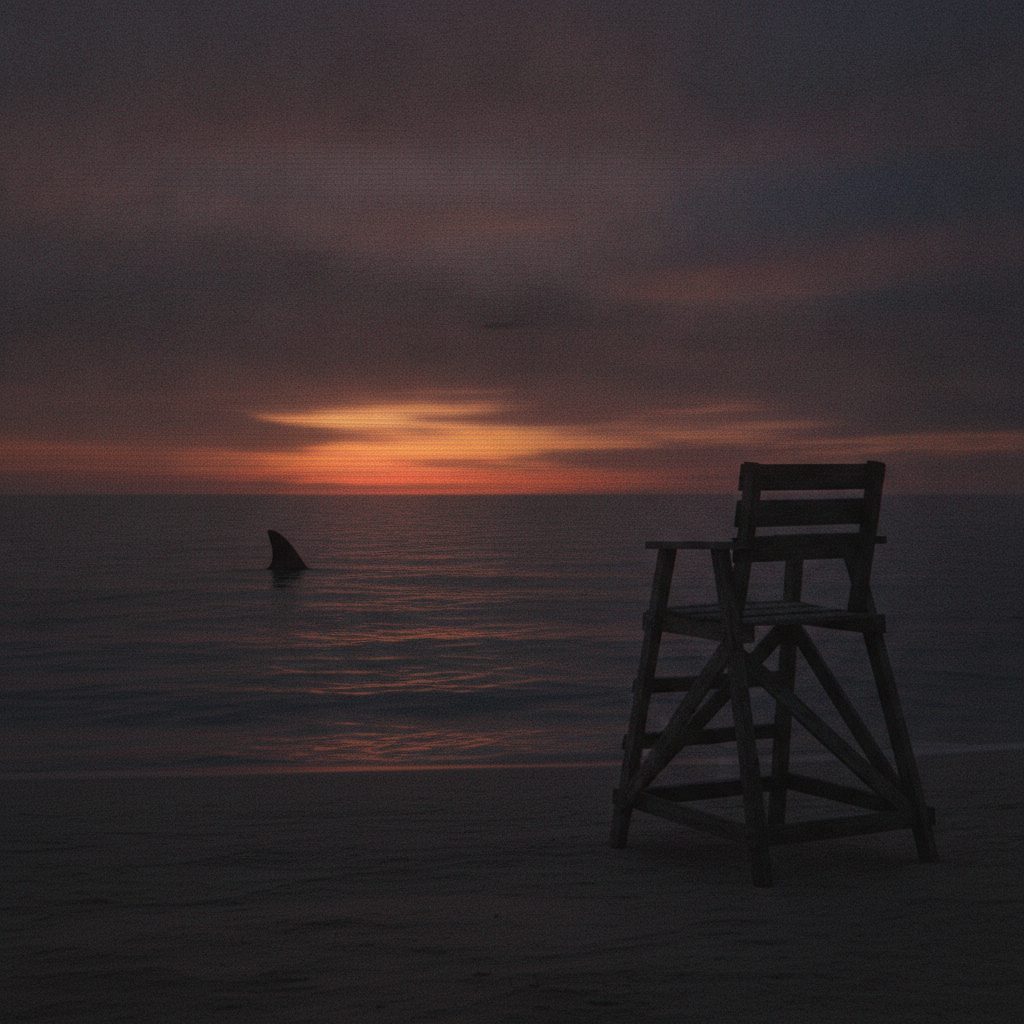
Before June 1975, the hot summer months were treated by Hollywood studios as a graveyard for cinematic oddities and secondary releases. Serious film releases took place in late autumn or during the holidays, while summer was reserved for air-conditioned revival houses or drive-in schlock. Studios traditionally favored a slow rollout model, slowly moving prints from major downtown venues to suburban theaters over many months. All of that traditional wisdom evaporated when Universal Pictures released a thrilling creature feature directed by a 27-year-old Steven Spielberg, permanently reshaping how movies were sold to the American public.
The making of the film was famously plagued by chaos and endless logistical nightmares. Filming on location off Martha's Vineyard marked the first time a major studio feature was shot on the open ocean, which proved to be a brutal trial for the crew. The centerpiece of the spectacle was a set of three full-sized, 25-foot mechanical sharks nicknamed Bruce after Spielberg's lawyer, Bruce Ramer. Unfortunately for the production, salt water wreaked havoc on Bruce's internal hydraulics and pneumatics. The fake shark continuously sank to the ocean floor, rusted, jammed, or looked hopelessly fake on camera, inflating the original 55-day shoot into an agonizing 159 days and swelling the budget from $4 million to $9 million.
Ironically, Bruce's constant breakdowns saved the movie. Forced to improvise because his mechanical star refused to work, Spielberg adopted a Hitchcockian style of suspense where the monster was suggested rather than shown. By utilizing underwater point-of-view shots, floating yellow barrels attached to invisible lines, and John Williams' legendary two-note ostinato score, Spielberg built unbearable dread out of thin air. When the terrifying predator made its full screen appearance in the third act, the audience was already primed for maximum impact because their own imaginations had done the heavy lifting.
The real genius of the film extended to its revolutionary marketing and distribution campaign. In 1975, studios rarely advertised movies heavily on network television, nor did they launch films on hundreds of screens at once. Universal Pictures broke the rules by unleashing a saturation campaign of prime-time television commercials featuring Roger Kastel's iconic poster artwork of a giant shark swimming toward an unsuspecting swimmer. On June 20, 1975, the studio opened the film on over 400 screens simultaneously across North America, turning a simple trip to the movies into a national event that everyone needed to experience immediately.
Moviegoers responded by lining up around block after block in the summer heat, eager to be frightened out of their wits. Jaws smashed every existing box office record and became the first feature film in cinema history to cross the $100 million mark at the box office. It eventually grossed over $470 million worldwide, reigning as the undisputed highest-grossing film of all time until George Lucas released Star Wars in 1977.
In doing so, Spielberg's shark tale rewrote the Hollywood playbook for good. It proved that the summer season was actually prime real estate for high-concept, big-budget event movies designed to capture youth culture and repeat viewers. The strategy of combining heavy television advertising, wide opening weekend releases, and catchy high-concept hooks became the official blueprint for the modern summer blockbuster. Decades later, every cinematic universe and summer tentpole still follows the trail of chum left behind by Bruce and his terrifying theme song.


Be the first to say something.