Long before the internet gave us instant messaging, streaming video, and cat memes, the world belonged to the public switched telephone network. Back in the middle of the twentieth century, telecommunications giant AT&T, affectionately known as Ma Bell, ruled the airwaves with an iron grip and steep rates for long-distance calls. Yet inside this massive web of copper wires lay a fascinating technical oversight. AT&T used in-band signaling, meaning call routing instructions and actual voice conversations traveled along the exact same audio channels.
This engineering choice opened the door to phone phreaking, an early form of telecommunication hacking where curious audio tinkerers manipulated network switching equipment using sound. The key to the entire kingdom was a specific frequency: 2600 hertz. When a 2600 Hz tone echoed through the phone line, AT&T switching equipment believed the user had hung up the call. The system disconnected the billing counter while keeping the long-distance trunk line open, leaving the phreak with an unbilled, operator-level connection ready to receive new dialing commands.
While several early phreaks experimented with audio generators, one figure became an instant folk hero of tech history. John Draper, a former United States Air Force technician, earned the nickname Captain Crunch after discovering an absurdly simple tool. A plastic toy whistle packaged inside Cap'n Crunch cereal boxes produced a pitch of exactly 2600 Hz when one of its dual sound holes was covered. By blowing the cereal toy into a standard telephone receiver, Draper demonstrated that a free prize from a breakfast cereal box could completely outsmart a multi-billion-dollar corporate monopoly.
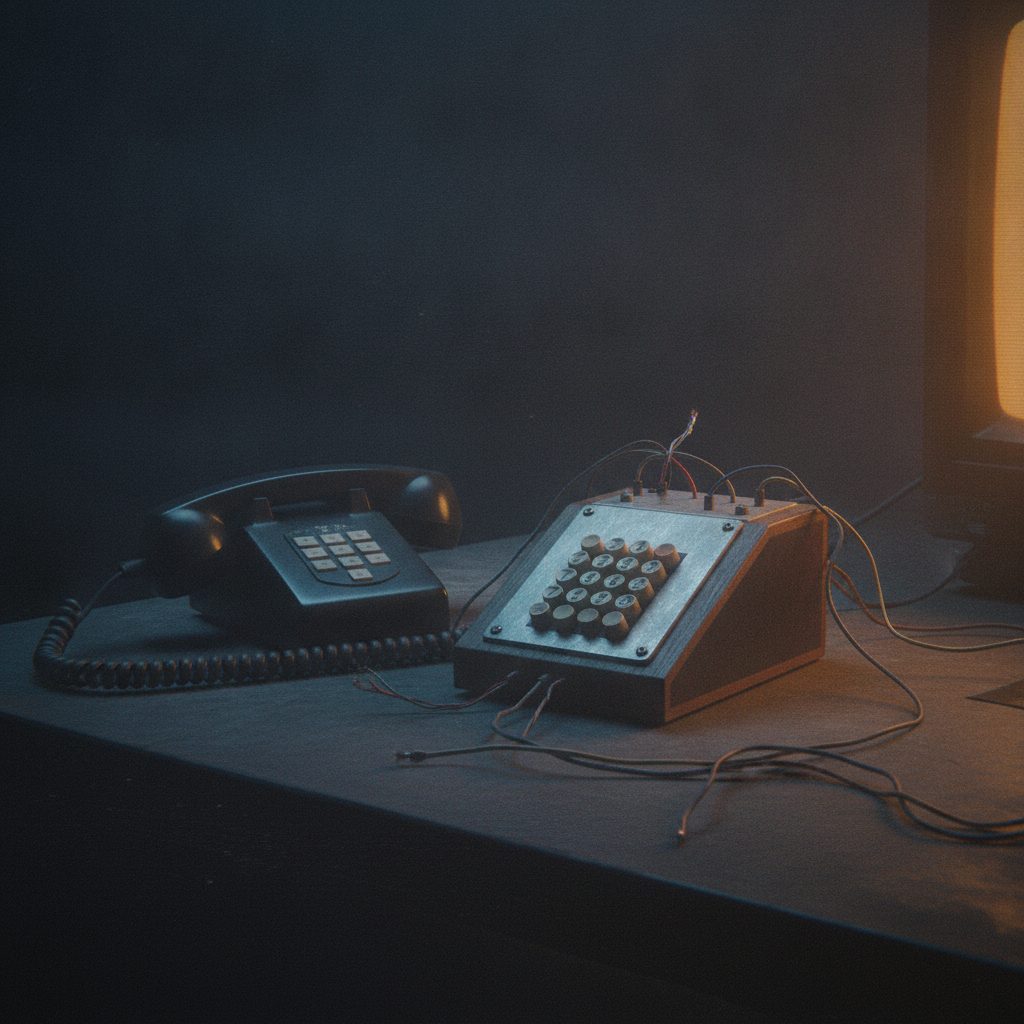
The subculture operated largely in secret until October 1971, when journalist Ron Rosenbaum published an explosive article in Esquire magazine titled Secrets of the Little Blue Box. The feature story exposed phone phreaking to mainstream readers, documenting how blind teenagers, technical prodigies, and eccentric hobbyists outwitted Ma Bell. Rosenbaum detailed how phreaks constructed handheld electronic devices known as blue boxes, which synthesized 2600 Hz supervisory tones alongside multi-frequency operator routing tones to grant users free calling access anywhere on earth.
The Esquire article caught the attention of two young California tinkerers: Steve Wozniak and Steve Jobs. Entranced by the concept, Wozniak quickly designed a digital blue box that proved far more reliable than the analog versions used by earlier phreaks. Recognizing the commercial opportunity, Jobs partnered with Wozniak to sell these custom units door-to-door in university dormitories at UC Berkeley. The duo produced dozens of blue boxes, selling them for roughly 150 dollars each, until legal risks persuaded them to close up shop.
That collegiate venture turned out to be the spiritual blueprint for tech empire building. Jobs later acknowledged that without the blue box experience, Apple Computer might never have existed. Building and selling a device capable of controlling hundreds of millions of dollars of telecommunication infrastructure convinced the pair that two young enthusiasts could tackle massive industrial giants. Decades before personal computers changed the world, a cereal whistle, a 2600 Hz tone, and a blue box proved that curiosity and clever engineering could unlock even the most heavily guarded networks.


Be the first to say something.