You had a drawer full of these. You probably still do.
Transmission incoming from the Common Clickbait vaults, where we are taking a nostalgic look back at the electronic wonders that defined tech culture across the 80s, 90s, and 2000s before modern smartphones and cloud storage rendered them totally extinct.
01
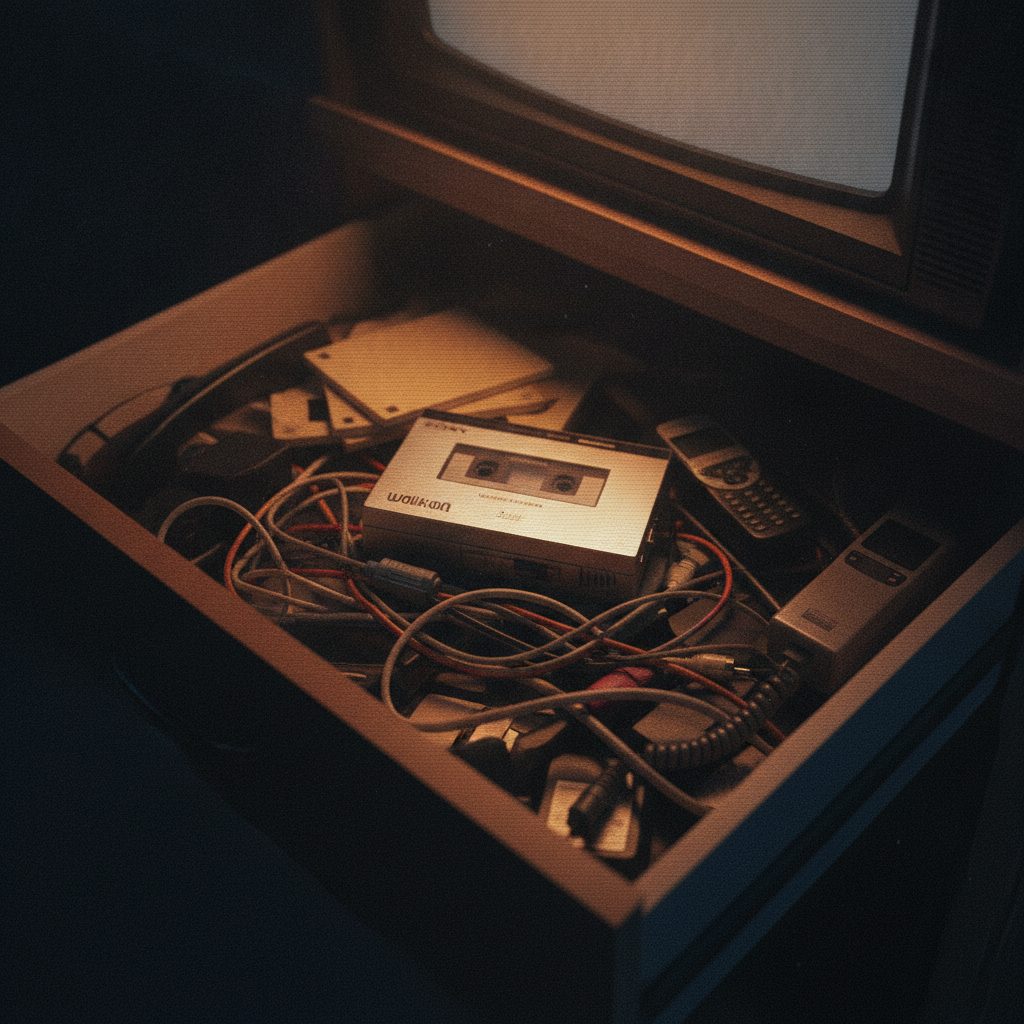
Sony Walkman (1980s)
The Sony Walkman TPS-L2 launched in 1979 and transformed personal listening throughout the 1980s by letting users carry cassette tapes anywhere. It freed music lovers from bulky home stereos and created the modern culture of personal audio. The format eventually succumbed to digital media and compact discs as consumers traded cassette tapes for skip-free playback.
Introduced in 1995, the Iomega Zip drive offered 100 megabytes of removable storage when standard floppy disks held a measly 1.44 megabytes. It became the go-to solution for backing up hefty graphic files and school projects during the late nineties. The drive fell out of favor when affordable writeable CDs and USB flash drives offered higher capacity with fewer hardware glitches.
Launching in 1997, the PalmPilot brought pocket computing to business travelers with a monochrome touchscreen and stylized Graffiti handwriting input. Users tapped styluses to manage calendars, contact lists, and to-do notes on the go. The entire personal digital assistant category evaporated once smartphones integrated cellular connectivity, full color screens, and mobile web browsing into a single device.
Sony unveiled the MiniDisc in 1992 as a tiny magneto-optical disc format meant to replace analog cassette tapes with digital sound quality. It gained huge popularity in Japan and among home audio enthusiasts who loved creating custom digital mixes in a durable plastic casing. Recordable MP3 players and flash memory cards eventually rendered the proprietary format obsolete before it could conquer the global mainstream.
Pagers were the primary way to stay reachable on the move during the eighties and nineties by displaying phone numbers or brief alphanumeric messages on a tiny liquid crystal display. Users had to hunt down a payphone or landline to return calls after hearing that unmistakable high-pitched beep. Mass adoption of digital mobile phones capable of direct voice calls and two-way text messaging quickly rendered consumer pagers obsolete.
Sony introduced the first portable CD player, dubbed the Discman D-50, in 1984 to bring digital compact disc audio onto the sidewalk. Early models required steady hands or specialized anti-skip buffers to prevent songs from stuttering while walking down the street. The heavy, battery-hungry portable CD player eventually lost the battle for pocket real estate to solid-state MP3 players like the iPod.
The rigid 3.5-inch floppy disk debuted in the early 1980s and served as the standard format for transferring software and files between personal computers for two decades. Boasting a maximum capacity of 1.44 megabytes, it defined a generation of personal computing and immortalized itself as the universal save icon. As file sizes blew past its strict storage limits, computer manufacturers dropped floppy drives in favor of optical drives and USB flash drives.
Released in late 2004, the Motorola Razr V3 redefined phone fashion with its ultra-thin aluminum clamshell design and electroluminescent keypad. It sold over 130 million units worldwide, becoming a staple status symbol of mid-2000s pop culture. The iconic flip phone lost its crown when full touchscreens and mobile app ecosystems ushered in the modern smartphone era.
Distributed free to millions of magazine subscribers in the year 2000, the CueCat was a cat-shaped barcode scanner designed to bridge print media with the early internet. Readers plugged the feline gadget into their computer keyboard port to scan physical barcodes printed in magazines, avoiding the hassle of typing web addresses. The device failed quickly due to privacy concerns, bulky wired tethering, and the simple reality that typing a website URL was far easier than scanning a magazine while sitting at a desk.
Microsoft launched the Zune portable media player in 2006 to challenge the dominance of Apple in the digital music market. It featured a bright screen, FM radio tuner, and innovative wireless sharing that allowed users to beam songs to nearby Zune owners. Arriving years after the iPod had captured the market, the Zune struggled to gain market share and was discontinued as smartphones absorbed dedicated media players.
Tiger Electronics released HitClips in 2000, selling tiny micro-chipped cartridges that played one-minute, low-fidelity mono clips of popular teen pop hits. Tweens wore the miniature players on keychains and backpacks to swap short snippets of songs by artists like Britney Spears and NSYNC on the school playground. The novelty faded fast as cheap digital MP3 players allowed kids to listen to complete, high-quality songs instead of 60-second audio teasers.
Apple launched the Newton MessagePad in 1993, pioneering the personal digital assistant category with a stylus interface and built-in handwriting recognition. Early models gained notorious media ridicule for misinterpreting user handwriting, a flaw immortalized in popular comic strips. Steve Jobs cancelled the Newton product line in 1998, though its core handheld concepts laid the foundation for future touchscreen operating systems.
We now return you to your regularly scheduled modern programming, but tell us in the comments which of these glorious electronic paperweights you kept in your closet the longest. Drop your favorite forgotten gadget story below or pass this broadcast along to a friend who still misses their Zune.
Liked this?
RC
The Remote Control Desk
The Common Clickbait crew who watch too much so you do not have to. Fueled by nostalgia, cheap snacks, and an unhealthy need to be right about the ending.
Join the conversation
0comments
Which forgotten gadget from this retro lineup did you carry everywhere, or which classic device did we miss?


Be the first to say something.