You've got mail. Also you've been online for four hours and the phone line is dead.
Welcome back to the glory days of dial-up internet, when connecting to the web was a noisy, thrilling adventure that required patience, strategy, and a total disregard for anyone trying to place a landline phone call.
Before high-speed Wi-Fi, entering the digital frontier required enduring a screechy modem handshake. You clicked connect and prayed that your mom would not pick up the kitchen receiver mid-session, instantly killing your connection. Tying up the family phone line for hours was a true rite of passage, frequently sparking heated household feuds over whether a busy signal was worth missing an incoming call from family members. The distinctive screech, hiss, and chime of a dial-up modem served as the official fanfare of an entire generation crossing into cyberspace.
In the early to mid 1990s, commercial online services acted as the gatekeepers to this strange new digital universe. Services like Prodigy offered family-oriented news, weather reports, and bulletin boards for a fixed monthly fee. Meanwhile, America Online flooded physical mailboxes across North America with millions of free trial floppy disks and CD-ROMs. Installing AOL felt like unlocking a magical portal where you were no longer just an ordinary teenager, but an intrepid digital explorer equipped with a custom online identity.
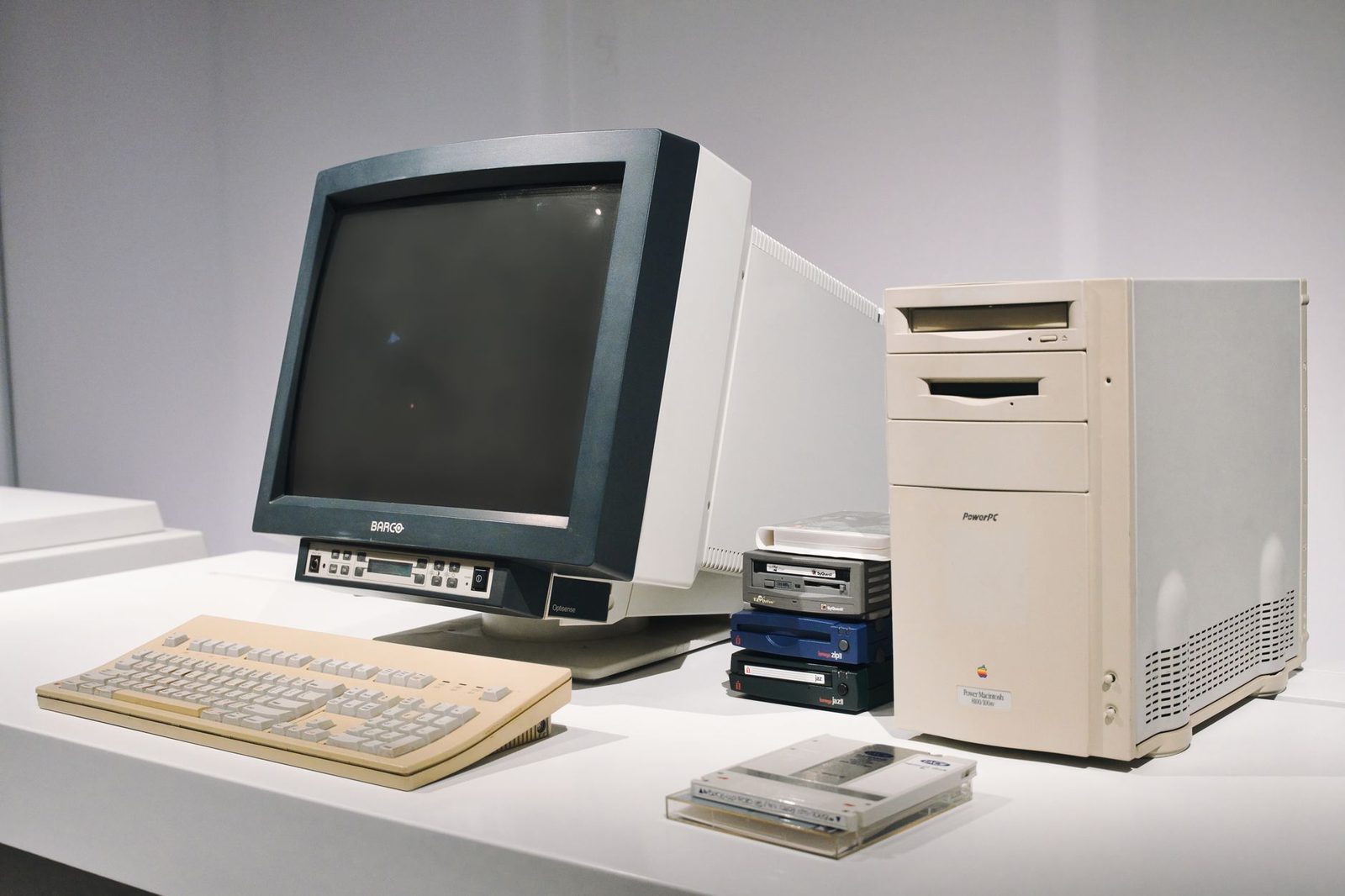
The beige altar where countless hours and one very tied-up phone line were sacrificed.
Crafting a screen name was your very first lesson in personal branding. You could not simply use your actual name in a chat room. You needed something that reflected your true aesthetic, such as Xx_GothSkater_xX or NeonSurfer99. Your screen name served as your personal passport across chat rooms and message boards, carefully constructed to project maximum cool factor to total strangers living across the continent.
Once inside America Online, users routinely rushed into sprawling chat rooms dedicated to sports, music, or local teen hangouts. The moment you entered a room, your screen filled with a rapid stream of text and a ubiquitous three-letter query: A/S/L. Asking for age, sex, and location became the universal icebreaker of early internet culture. It was standard internet etiquette that allowed users to quickly establish basic context before swapping pop culture opinions or personal stories.
Few things offered a direct hit of joy quite like hearing a friendly voice announce that new digital correspondence had arrived. That iconic greeting was recorded in 1989 by voice actor Elwood Edwards, instantly becoming one of the most recognizable soundbites in technological history. If you struck up a friendly conversation in a public room, the next logical step was trading photos. In an era long before instant smartphone cameras, requesting a pic for pic meant waiting minutes for a tiny, low-resolution JPEG file to render slowly line by line on your monitor.
By 1997, AOL launched AOL Instant Messenger, bringing real-time buddy lists and instant messaging to personal computers everywhere. The distinctive door-opening sound effect meant a close friend had logged on, while the slamming door announced their departure. The absolute height of late 1990s self-expression was the AIM away message. Decorating your away message with emotional alternative rock lyrics, cryptic inside jokes, or detailed status updates served as the direct ancestor to modern social media posts.
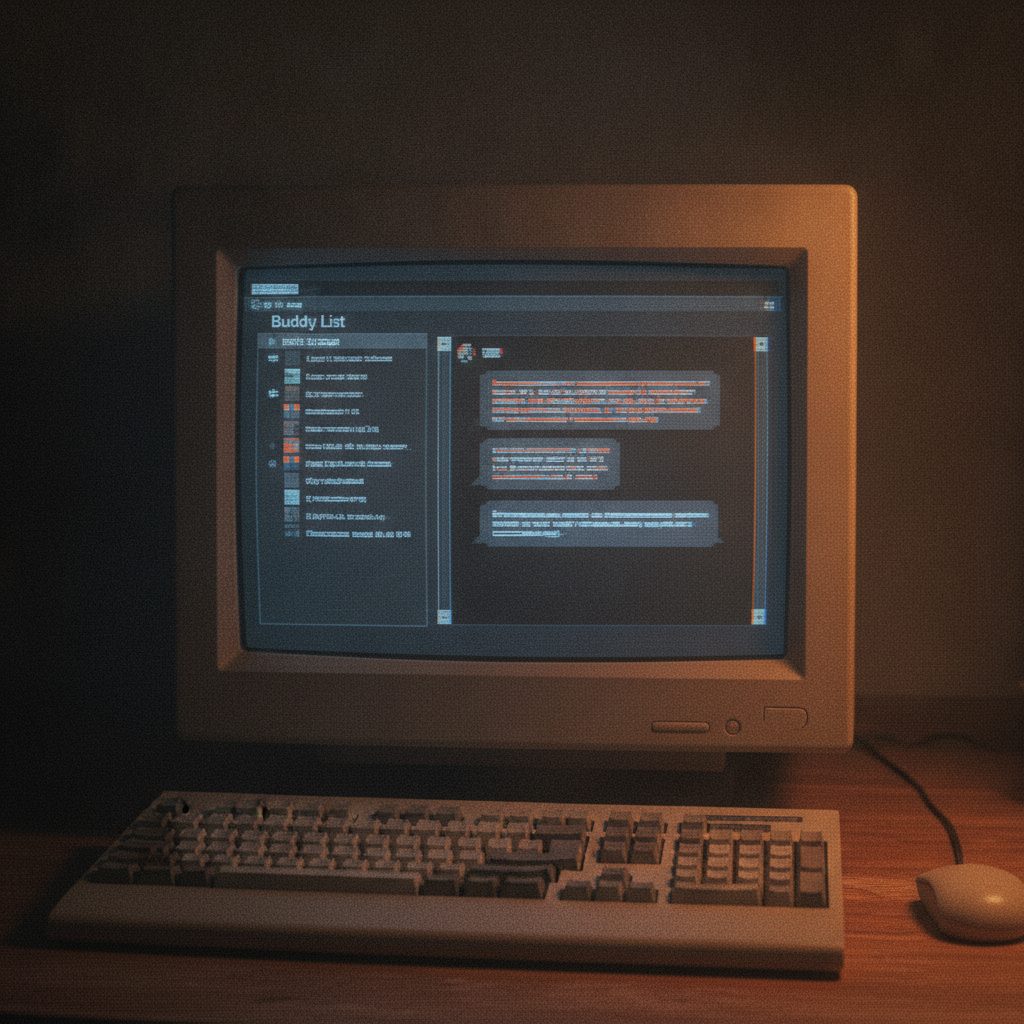
The buddy list: part social network, part surveillance system for your crush's screen name.
Navigating those pioneering chat rooms also forced users to invent basic rules of online conduct. Typing your entire message in capital letters was quickly recognized as the digital equivalent of shouting at the room. Convenient shorthand acronyms such as BRB for be right back and AFK for away from keyboard quickly became second nature to millions of users. It was an era defined by patience, bizarre audio cues, and creative reinvention that permanently changed how humans communicate across the globe.
If reading this gave you a sudden urge to hear that door-slam sound again, you are in luck. A project called Nina is working to revive AIM, AOL Instant Messenger, and other classic chat protocols, letting you log back on and rebuild that buddy list decades later. You can find it at nina.chat.
The Common Clickbait crew who watch too much so you do not have to. Fueled by nostalgia, cheap snacks, and an unhealthy need to be right about the ending.
Join the conversation
0comments
What was your first screen name? No judgment, drop it in the comments.




Be the first to say something.