Turn your television dial back to the golden era of broadcast comedy, and you will hear a soundtrack of enthusiastic chuckles accompanying every punchline. Yet for decades, those booming guffaws were not coming from a theater full of delighted spectators. They were coming from a single machine operated by one secretive engineer named Charley Douglass. In 1953, while working for CBS, sound engineer Charles Douglass recognized a distinct technical challenge in early television production. Studio audiences were often unpredictable. They giggled at the wrong times, laughed too loudly during dialogue, or grew quiet during tedious scene retakes. To solve this dilemma, Douglass gathered raw audio recordings of audience reactions, famously lifting clean chuckles from pantomime segments on The Red Skelton Show. He compiled these sounds into a groundbreaking custom invention dubbed the Laff Box.
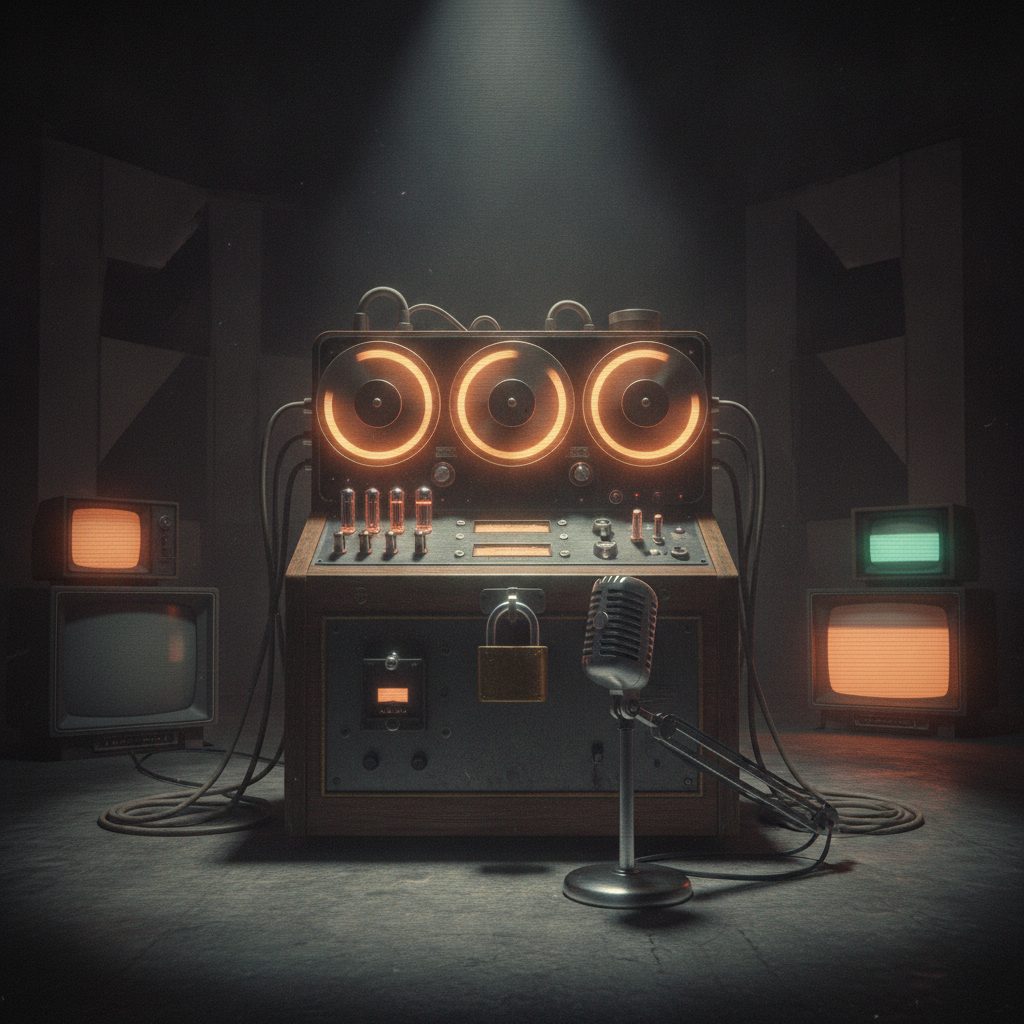
From the late 1950s through the late 1970s, Douglass held a near-monopoly on canned laughter across American prime-time broadcasting. His original Laff Box stood over two feet tall and was housed inside a padlocked wooden cabinet. Inside the unit sat 32 magnetic tape loops containing hundreds of distinct human giggles, snickers, and applause clips. Douglass operated the device much like a musical organ. He pressed typewriter-style keys to select specific laughter profiles based on age, gender, and comedic intensity, while using a foot pedal to control the exact duration of the clip. To maintain his monopoly and protect his trade secrets, Douglass kept the internal mechanism strictly hidden. He transported the machine inside a locked van, locked himself away during audio sessions, and refused to let producers or directors watch him operate the controls.
The television industry coined the term "sweetening" to describe this delicate art of manipulating broadcast audio. Sound editors used sweetening to alter live audience reactions, filling in silent pauses, boosting faint giggles, or toning down obnoxious audience members. What began as a subtle corrective tool soon grew into a staple of multi-camera sitcoms, animated series, and variety broadcasts. Network executives quickly grew accustomed to artificial reactions, viewing them as an essential guidepost for home audiences.
Not every television creator embraced canned laughter with open arms. When series developers Larry Gelbart and Gene Reynolds created M*A*S*H for CBS in 1972, they pushed back vigorously against network demands for a laugh track. CBS insisted that American sitcom viewers required sonic cues, leading to a compromise. While general camp scenes included a subdued laugh track, Gelbart and Reynolds strictly prohibited canned chuckles during operating room sequences. Overseas viewers in the United Kingdom were treated to broadcasts completely free of the artificial track. Later home media releases, including DVD editions, provided an audio option to turn off the laugh track entirely, allowing viewers to appreciate the quiet dramatic tension of the series.
By the turn of the twenty-first century, the dominance of the traditional laugh track began to fade rapidly. Comedic tastes shifted toward single-camera productions that relied on naturalistic pacing and visual humor rather than theatrical staging. Showrunners behind series like Malcolm in the Middle, The Office, Parks and Recreation, and Modern Family abandoned canned reactions altogether. Modern single-camera comedies demonstrated that viewers did not need an invisible chorus to guide their humor. Today, the legendary padlocked Laff Box remains a fascinating relic of mid-century broadcast technology, reminding us of an era when prime-time laughter was kept under lock and key.

Be the first to say something.