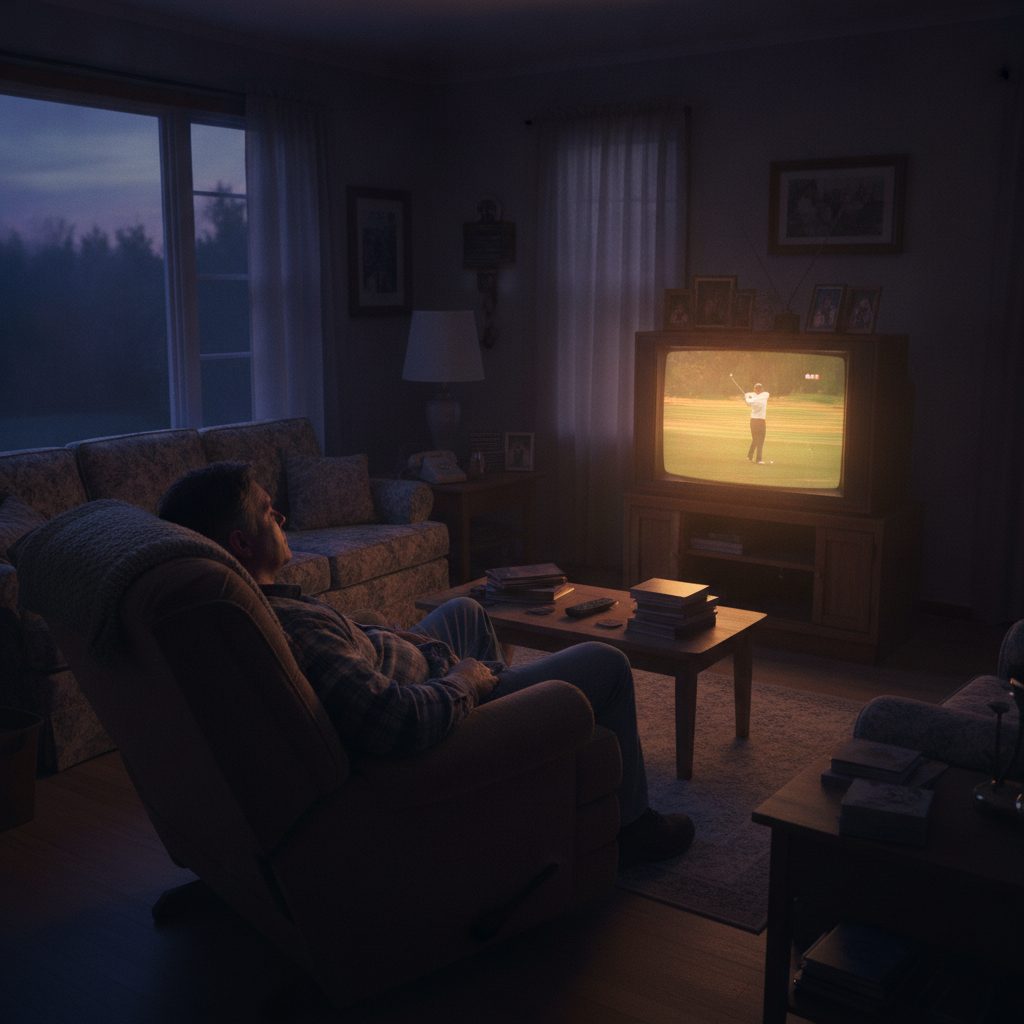
Picture a humid Sunday afternoon in the middle of the nineteen nineties. The ceiling fan rotates on medium speed, casting soft shadows across the living room carpet. Over on the sofa, a father slumps into the cushions with his hands folded across his chest. If questioned, he will maintain that he is not sleeping, merely resting his eyes. On the television screen, a broadcast unfolds in soft pastel hues and low decibels. This was the golden age of ambient comfort television, a lineup of shows that felt almost mathematically engineered to induce peaceful, low stakes slumber.
At the center of this cozy weekend universe sat Bob Ross and The Joy of Painting on PBS. Broadcasting half hour art lessons across public television, the former military veteran brought an unmatched stillness to the screen. Ross dipped his wide brush into oil paints, gently tapping out misty mountains and happy little trees. There were no sudden sound effects, no shouting, and no dramatic narrative turns. The tapping of his brush against the canvas acted like rhythmic rain on a tin roof, transforming public television into an early form of ambient white noise.
If painting was not on the schedule, Sunday afternoon golf on CBS took command of the living room airwaves. PGA Tour telecasts possessed a hypnotic quality that modern network executives can only dream of matching. The commentators spoke in hushed whispers as though an outdoor speaking voice might ruin a putt three miles away. The audio backdrop consisted of polite applause, distant lawnmowers, rustling trees, and the faint chime of a golf ball dropping into a cup. You could close your eyes on the twelfth hole, sleep through forty five minutes of fairway walking, and awake on the sixteenth hole without having missed a single pulse raising moment.
For outdoor enthusiasts who preferred water over turf, Bill Dance Outdoors offered a similar cadence of tranquility. Host Bill Dance, sporting his signature Tennessee Volunteers cap, spent thirty minutes casting lures into serene southern reservoirs. The water lapped gently against his bass boat, accompanied by low key commentary and occasional jokes. Even when a largemouth bass bit the line, the excitement remained delightfully contained, keeping heart rates steady and keeping viewers anchored deep inside their recliners.
Home improvement television took a similarly unhurried approach on PBS with This Old House and its companion show, The New Yankee Workshop. Hosts like Bob Vila and Steve Thomas joined master carpenter Norm Abram to demonstrate the patient mechanics of home restoration. Audiences watched plaster dry, pine boards pass through table saws, and custom dovetail joints slide together. Norm Abram reminded viewers to wear safety glasses in a calm Massachusetts accent that functioned like an auditory weighted blanket. Watching someone else measure twice and cut once was profoundly satisfying work, especially when staying awake required far too much physical exertion.
When a television signal needed to reach absolute zero in emotional volatility, C-SPAN delivered. Established in 1979 as a non profit public service network, C-SPAN broadcast congressional floor proceedings without sound effects, commercial interruptions, or commentary. A lone representative addressing an empty house chamber about agricultural policy created a steady, droning hum. Likewise, public television nature documentaries swept across oceans and forests in unhurried wide shots, guided by warm narration and soft orchestral scores.
Why did these specific programs work so effectively as nap fuel? Modern streaming platforms build every episode around high tension, jump cuts, and aggressive audio mixing designed to lock your eyeballs to the screen. Retro weekend broadcasting understood the magic of predictable low stakes. If a cloud got painted, a cabinet got sanded, or a parliamentary motion got tabled, the universe stayed in harmony. A dad could close his eyes with complete confidence, knowing that everything was under control on the screen.
Be the first to say something.